babe@babe.hr
+385 1 4663 666
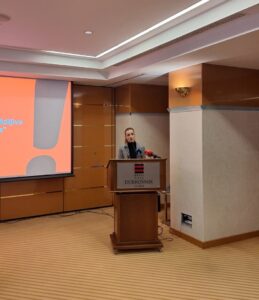
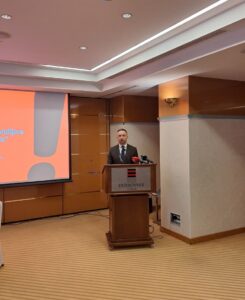
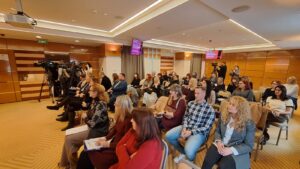
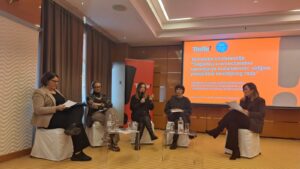
18.12.2025. u organizaciji udruge B.a.B.e. u Hotelu Dubrovnik u Zagrebu održana je tematska konferencija “Kognitivno-emocionalno upravljanje kućanstvom: vidljive posljedice nevidljivog rada", u okviru Tematske sustavne podrške Nacionalne zaklade za razvoj civilnoga društva u području “Usklađivanje privatnog i poslovnog života”.
Konferenciju je uvodnim obraćanjem otvorila Petra Kontić, dok je ministar rada, mirovinskoga sustava, obitelji i socijalne politike Marin Piletić održao pozdravni govor. Središnji dio događanja obilježila je panel rasprava "Mentalni rad: od obiteljske sfere do društvene odgovornosti - izazovi i rješenja" na kojoj su sudjelovale Pravobraniteljica za ravnopravnost spolova Višnja Ljubičić, predsjednica Odbora za ravnopravnost spolova Hrvatskog sabora Marija Lugarić, državna tajnica u Ministarstvu demografije i useljeništva Željka Josić te dr. sc. Blanka Čop s Katedre za sociologiju Pravnog fakulteta u Splitu. Stručni doprinos konferenciji dale su i izv. prof. dr. sc. Valerija Barada i doc. dr. sc. Željka Zdravković s Odjela za sociologiju Sveučilišta u Zadru predstavljanjem rezultata socioloških istraživanja.
Na tematskoj konferenciji otvoren je prostor za međusektorsku raspravu o važnosti ravnomjerne podjele kognitivnog i emotivnog rada. Sudionici/ce iz različitih područja istaknuli su dalekosežne posljedice neravnomjerne raspodjele mentalnog rada na ravnotežu privatnog i poslovnog života, produktivnost na tržištu rada, rodnu ravnopravnost i demografske trendove. Konferencija je pridonijela podizanju svijesti o često nevidljivoj, ali ključnoj dimenziji rada te naglasila potrebu za sustavnim uključivanjem kognitivnog i emotivnog rada u javne politike i okvire za donošenje odluka.
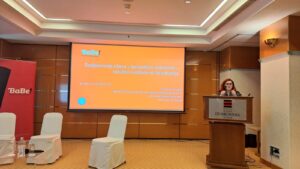
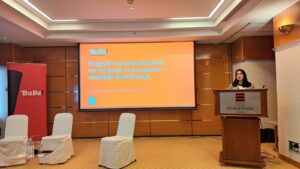
U sklopu Tematske sustavne podrške Nacionalne zaklade za razvoj civilnoga društva u području “Usklađivanje privatnog i poslovnog života“ 17. prosinca 2025. u organizaciji udruge B.a.B.e. održano je predavanje pod nazivom “Kognitivno-emocionalno upravljanje kućanstvom - instrument i inicijalni rezultati“ na Odsjeku za sociologiju Filozofskog fakulteta u Zagrebu. Predavanje su održale izv. prof. dr. sc. Valerija Barada, dr. sc. Blanka Čop i doc. dr. sc. Željka Zdravković.
Na početku predavanja, studentima i studenticama predstavljene su aktivnosti na projektu Tematska sustavna podrška te je objašnjena društvena relevanost teme, a potom su u fokus stavljena istraživanja provedena u sklopu završenog projekta udruge B.a.B.e. pod nazivom “Utjecaj javnih politika na kvalitetu obiteljskog i radnog života te na demografsku sliku Hrvatske – prostori promjene“, kao i nastavak istraživanja koje se provelo u drugoj godini projekta Tematska sustavna podrška Nacionalne zaklade za razvoj civilnoga društva u području 'Usklađivanje privatnog i poslovnog života'. Izv. prof. dr. sc. Valerija Barada izložila je teorijski i metodološki okvir te kompleksnost istraživanja, zajedno s nacrtom i ciljevima istraživanja, dr. sc. Blanka Čop predstavila je instrumente, njihove dimenzije, razine i čestice koje mjere kognitivno-emocionalno upravljanje kućanstvom, dok je doc. dr. sc. Željka Zdravković u izlaganju prikazala inicijalne rezultate proširenog KEUK upitnika.
Predavanje je bilo prilagođeno studentima i održano je u interaktivnom formatu, a na kraju se razvila poticajna i konstruktivna diskusija. Tijekom rasprave razgovaralo se o mogućnostima primjene KEUK upitnika u različitim tipovima kućanstava, kao i o izazovima mjerenja kognitivno-emocionalnih aspekata kućanskog rada.
Od 15. do 16. prosinca 2025. godine u sklopu CHANEL’s Funder+ programa 2025, održan je studijski posjet organizacije Diotima Centre, ženske neprofitne organizacije iz Grčke. Predstavnice organizacije Diotima Centre, Dora Briazna i Chara Karagiannaki-Michaloglou, održale su sastanak s udrugom B.a.B.e., nakon čega su posjetile ured Pravobraniteljice za ravnopravnost spolova, Nacionalni pozivni centar za žrtve kaznenih djela i prekršaja te Dom za djecu i odrasle žrtve obiteljskog nasilja „Duga – Zagreb“.
Diotima Centre je ženska neprofitna organizacija koja se specijalizira za pitanja nasilja nad ženama i rodne ravnopravnosti. Osnovana 1989. godine, organizacija se usmjerava na isticanje i uklanjanje rodno uvjetovanih diskriminacija te na osnaživanje žena. Ključne aktivnosti organizacije uključuju prevenciju i tretman rodno uvjetovanog nasilja, kao i pružanje podrške žrtvama nasilja.
Tijekom studijskog posjeta, predstavnice Diotima Centra i B.a.B.e. razmijenile su iskustva i stručna znanja na nekoliko ključnih područja. Raspravljalo se o rodno uvjetovanom nasilju u obje zemlje, pri čemu su istaknuti slični izazovi i napori za veću vidljivost problema nasilja u obitelji te jačanje sustava zaštite žrtava. Također, razgovaralo se o rodnoj ravnopravnosti, pri čemu su obje strane suglasne da iako postoje napori za veću ravnopravnost, rodna nejednakost i dalje ostaje prisutna u mnogim društvenim segmentima. Uz to, razmijenjena su iskustva o stanju civilnog društva, izazovima i prilikama organizacija koje se bave pravima žena i prevencijom nasilja. Obje strane istaknule su važnost međusektorske suradnje s ciljem promicanja ravnopravnosti, unaprijeđenja prava žena i borbi protiv nasilja.
Razmjena iskustava i stručnog znanja tijekom posjeta otvorila je put za daljnje zajedničke inicijative, koje će omogućiti jaču podršku ženama i učinkovitiju borbu protiv rodno uvjetovanog nasilja, te doprinijeti unaprjeđenju rada civilnog društva i promicanju rodne ravnopravnosti u obje zemlje.
U sklopu Tematske sustavne podrške Nacionalne zaklade za razvoj civilnoga društva u području “Usklađivanje privatnog i poslovnog života“ 28. listopada 2025. u organizaciji udruge B.a.B.e. održana su predavanja pod nazivom “Obiteljske i radne obaveze roditelja: nacrt istraživanja“ te “Životne prilike mladih i rodne nejednakosti u prijelazu u odraslu dob“ na Odsjeku za sociologiju Filozofskog fakulteta u Osijeku. Predavanje su održale održale izv. prof. dr. sc. Valerija Barada i doc. dr. sc. Željka Zdravković.
Na početku predavanja, studentima i studenticama predstavljene su aktivnosti na projektu Tematska sustavna podrška te je objašnjena društvena relevantnost teme, a potom su u fokus stavljena istraživanja provedena u sklopu završenog projekta udruge B.a.B.e. „Utjecaj javnih politika na kvalitetu obiteljskog i radnog života te na demografsku sliku Hrvatske - prostori promjene”. Predavačice su predstavile teorijsku i metodološku podlogu istraživanja, nacrt i ciljeve istraživanja, izazove u provedbi i interpretaciji te podatke istraživanja o usklađivanju obiteljskih i profesionalnih obaveza zaposlenih roditelja maloljetne djece u Hrvatskoj.
The lecture was tailored to students and was held in an interactive format, with the aim of providing insight into the scientific basis of the problem, stimulating students' interest in further research on this topic, and raising awareness about the importance of balance between private and professional life.

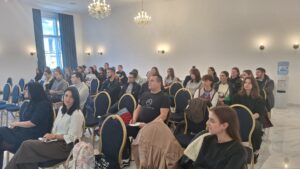
U sklopu Tematske sustavne podrške Nacionalne zaklade za razvoj civilnoga društva u području “Usklađivanje privatnog i poslovnog života“ 26. svibnja 2025. u organizaciji udruge B.a.B.e. održano je predavanje pod nazivom "Kućanski poslovi kao iskaz rodnog identiteta i/ili uloge?" na Odsjeku za kulturalne studije Filozofskog fakulteta u Rijeci. Predavanje je održala izv. prof. dr. sc. Valerija Barada.
Na početku predavanja, studentima i studenticama predstavljene su aktivnosti na projektu Tematska sustavna podrška te je objašnjena društvena relevanost teme, a potom su u fokus stavljena istraživanja provedena u sklopu završenog projekta udruge B.a.B.e. „Utjecaj javnih politika na kvalitetu obiteljskog i radnog života te na demografsku sliku Hrvatske - prostori promjene”. Predavačica je predstavila teorijsku i metodološku podlogu istraživanja, nacrt i ciljeve istraživanja, izazove u provedbi i interpretaciji te podatke istraživanja o usklađivanju obiteljskih i profesionalnih obaveza zaposlenih roditelja maloljetne djece u Hrvatskoj.
The lecture was tailored to students and was held in an interactive format, with the aim of providing insight into the scientific basis of the problem, stimulating students' interest in further research on this topic, and raising awareness about the importance of balance between private and professional life.
The B.a.B.e Association invites you to the final conference of the SURF and SOUND 2.0 project , which will be held February 25, 2025 at the Sheraton Hotel in Zagreb, starting at 9:30 a.m.
The SURF and SOUND 2.0 project is aimed at combating online violence against women and is implemented by the association Baby. Be active. Be emancipated. in cooperation with the Agency for Electronic Media , with the support of the Ministry of the Interior and the Judicial Academy . The project in question was financed by the European Union from the CERC program and co-financed by the Office for Cooperation with NGOs.
The final conference will be an opportunity to present the results achieved, discuss future activities, and strengthen cooperation among stakeholders working to protect women in the digital space.
20. and 21 June 2024, a two-day thematic multidisciplinary discussion entitled "Family as a Workplace: Research and Public Policies" was held at the Department of Sociology of the University of Zadar within the framework of the Thematic Systematic Support of the National Foundation for the Development of Civil Society in the area of 'Reconciliation of Private and Professional Life' . The multidisciplinary discussion brought together prominent Croatian scientists from various scientific and higher education institutions with the aim of discussing methodological approaches and experiences in the area of reconciling family and professional obligations of women and men, and with the purpose of opening up space for understanding, creating and implementing public policies within the framework of reconciling private and professional life.
The first day of the multidisciplinary discussion was given by: Assoc. Prof. Dr. Sc. Valerija Barada from the Department of Sociology, University of Zadar and Associate Professor Dr. Sc. Ksenija Klasnić from the Department of Sociology, Faculty of Philosophy, University of Zagreb.
Assoc. Prof. Dr. Sc. Valerija Barada presented research conducted in 2022 as part of the B.a.B.e association project. "The Impact of Public Policies on the Quality of Family and Working Life and on the Demographic Picture of Croatia - Spaces of Change". The research included multi-stage and multi-component action research using a mixed method, and showed that household chores, especially routine ones, are still most often performed by women; that women also more often have to manage resources, time, emotions and relationships in the family; that women more often experience tensions between family and work roles than men; that children from less developed regions and children from unemployed or single-parent households have a lower chance of using public care and education services.
Assoc. Prof. Dr. Sc. Ksenija Klasnić presented experiences from five projects she implemented in the period from 2017 to 2024, which included housework, work-life balance and mental work as research subjects. She presented different methodological approaches, which most often included mixed methodology, and highlighted individual findings such as the discrepancy in the amount of time and type of engagement that women and men devote to performing household and other family duties; the existence of gender inequalities in performing mental work between men and women in the private sphere, and the introduction of work flexibility for employees as a tool that would particularly contribute to a more successful reconciliation of the private and professional spheres.
After the presentation, a discussion was held about the possibilities of using digital tools to increase the quality of life of working mothers, about public services, about flexible forms of work and the procedures for constructing various tools for measuring family chores and mental work.
On the second day of the multidisciplinary discussion, a public panel was held, attended by scientists, graduate students, and representatives of the City of Zadar, Zadar County, the Croatian Employment Service, and the Croatian Institute of Public Health. In the introductory part of the panel discussion, Tamara Šterk from the B.a.B.e association presented activities from the first year of implementation of the Thematic Systematic Support of the National Foundation for the Development of Civil Society, and Assoc. Prof. Dr. Sc. Valerija Barada emphasized the intention that the research would serve to open a dialogue with key stakeholders, with the aim of designing and implementing public policies in the area of improving the reconciliation of private and professional life.
The panel discussion was attended by Dr. Mirjana Adamović , Institute for Social Research in Zagreb, Dr. Blanka Čop , Department of Sociology at the Faculty of Law in Split, assoc. prof. Ph.D. sc. Anita Dremel , Department of Sociology, Faculty of Philosophy in Osijek, Associate Professor Dr. Sc. Ksenija Klasnić , Department of Sociology, Faculty of Philosophy, University of Zagreb, Dr. Marija Šarić , Department of Sociology, University of Zadar and Assoc. Ph.D. sc. Željka Zdravković , Department of Sociology, University of Zadar.
The conclusions of the public panel can be summarized in a few key points, as follows:
- men who are involved in household/family work mostly perform duties related to the outdoor space (walking with children, repairing and taking care of the car, buying groceries, etc.), which can place women in an isolating position within the household with repetitive tasks
- mental work is invisible, permanent, diffuse, unpaid and mostly performed by women, as a result of which they show the negative consequences of too much mental work that can lead to mental strain
- social aspects of mental work include organizing family life, maintaining social relationships outside the household, and providing emotional support to household members
- cognitive-emotional household management consists of two dimensions: resource and time management and emotion and relationship management, and within both dimensions, reach and intensity can be measured.
- work obligations more often have an impact on family life for women than for men
- men perceive that they perform family/household chores equally to their partners, while women estimate that they mostly do the above
- research shows that respondents are equally divided in their views on the division of household work, while practice indicates that behavior lags behind attitudes.
- public policies within the framework of balancing private and professional life should be gender, age and regionally adapted
In the closed part of the discussion that followed the public panel, the emotional and cognitive components of mental work and its social aspects, analytical dimensions in measuring mental work, and methods of researching mental work were discussed.
The two-day thematic multidisciplinary discussion is just one in a series of activities aimed at exchanging knowledge and experiences between different stakeholders with the aim of opening a dialogue and creating proposals for improving public policies for harmonizing the private and professional lives of women and men based on research data. We continue to work on raising awareness about the importance of equal sharing of family responsibilities between women and men and the importance of gender equality and enabling harmony between private and professional life.


The final conference of the project "puSHEd – protect, understand, support: help the elderly" was held at the House of Europe on Wednesday, 22 May 2024, starting at 12:00. The conference brought together important stakeholders from different sectors and thus rounded off an interdisciplinary view of the topic of gender-based violence against older women. Participants had the opportunity to hear more about economic violence, sexual violence and strategies to combat violence against older people.
Project manager Marina Gombar presented the project's activities and results to those present and emphasized that what the system needs most is education, awareness-raising, and mutual cooperation between all stakeholders in the system of support for women victims of violence.
Advisor to the Ombudsman Silvija Trgovec-Greif She highlighted a number of different forms of violence that citizens turn to her for help. She added that the system is focused on physical violence, but there are many other problems, such as a lack of palliative care, a lack of places in nursing homes, and inappropriate attitudes of doctors towards the elderly.
Anica Jezic , Head of the Sector for Development and Improvement of Social Services at the Ministry of Labor, Pension System, Family and Social Policy, spoke to the participants about the operational plan of activities for connecting health and social services in the field of long-term care, as well as changes in the law on social welfare - changes in the field of development of social services.
Iva Prpic , Head of the Department for Support to Children and Families, City Office for Social Protection, Health, Veterans and Persons with Disabilities at the City of Zagreb, emphasized that the City of Zagreb is developing and supporting a local system of support and protection for victims of domestic violence and is paying special attention to respecting the rights and supporting particularly vulnerable groups, including the elderly.
Zeljka Baric , director of the Home for Children and Adult Victims of Domestic Violence 'Duga – Zagreb', pointed out that the number of calls from elderly women seeking help has increased at the Home. She also pointed out that the state, in cooperation with the profession, should develop a strategy to combat violence against the elderly with an appropriate framework and synergically network the activities of the social welfare and healthcare systems.
Attorney Ljubica Matijevic Vrsaljko highlighted the problem of financial violence, especially through life support contracts, and the slowness of the judiciary in such cases. Psychotherapist and psychologist Marijana Senjak presented her work on victims of sexual violence to the attendees.
The aim of the project is to prevent and combat gender-based violence against older women by developing gender-specific responses in providing support to victims and building the capacity of relevant experts from the protection and support system. The project is also aimed at raising awareness among the general population and improving the community's response to gender-based violence against older women, primarily by increasing the number of reports of violence, but also by preventing it. The project "puSHEd - protect, understand, support, help the elderly" was launched by the B.a.B.e association in partnership with the City of Zagreb and Dom Duga Zagreb, with the support of the Ombudsman, the Association for Victims and Witnesses Support and the European Social Network. The project lasted 24 months and was financed by the Citizens, Equality, Rights and Values (CERV) programme of the European Union and co-financed by the Office for Cooperation with NGOs.

On April 3, 2024, five associations signed agreements with the National Foundation for the Development of Civil Society for inclusion in the Thematic Systematic Support for five thematic areas that will be significant for the development of Croatian society in the next four years. A new project of the B.a.B.e association. within the framework of the Thematic Systematic Support, it refers to the reconciliation of private and business life and represents a continuation of the 2015 project "Women in the Labor Market - Assessment of Gender Impact" and the project that ended in 2023 "The Impact of Public Policies on the Quality of Family and Work Life and on the Demographic Picture of the Republic of Croatia - Spaces of Change", which, thanks to scientific research (Faculty of Political Science in Zagreb and Faculty of Philosophy in Zadar, Department of Sociology), confirmed that the issue of reconciliation of obligations in private and business life is closely related to social policy and measures aimed at providing assistance for the care and attention of dependent family members, flexibilization of work and working hours of employees, tax policy, health insurance, poverty rate, demographic trends and generally available services at the national and local levels, and is closely related to the roles and expectations that women and men have in the family, but also to the expectations imposed by the labor market.
The project includes continued cooperation with higher education institutions, an advocacy campaign that contributes to raising public awareness of the complexity of the topic, thematic conferences on models of work-life balance, where we expect synergy between scientific institutions, the economy, public policy makers and civil society. We expect that the media visibility of this topic will contribute to raising public and decision-makers' awareness and result in a comprehensive public policy for balancing family and work life for men and women. We face various forms and methods of work, the key of which are: advocacy for a coherent public policy that regulates the balance of family and work life at the national and local levels, with clear indicators of progress; monitoring legislative solutions and their social impact on the balance of private and work obligations; public campaigns aimed at raising awareness among the public, employers and decision-makers about the inequalities produced by gender stereotypes and traditional gender roles; structured dialogues with all relevant stakeholders on how to eliminate stereotypes about the role of women and men in the family and on the labor market, including the media and the educational system; effective dialogue with employers and providing support and assistance to their efforts to enable employees to more easily reconcile obligations, especially women; open discussions and expert conferences on new trends, research and modern models of reconciling private and business life with the aim of improving employers' practices; establishing a joint platform for action in this area with civil society organizations.


On 12 December 2023, the European Court of Human Rights published its judgment in the case of Vučković v. Croatia, application number: 15798/20, which found that the Republic of Croatia, in criminal proceedings conducted for sexual violence committed against the applicant, Ms. Maja Vučković, by imposing a disproportionately lenient sentence on the perpetrator, violated the applicant's rights guaranteed by Art. 3. and Art. 8. European Conventions.
At the end of 2019, the applicant contacted the B.a.B.e association with a complaint that the perpetrator who sexually abused her at work had been sentenced to community service in criminal proceedings, after which, with the support of B.a.B.e association lawyers Ines Bojić and Zvjezdana Kuprešak, a request was submitted to the European Court of Human Rights for violation of the applicant's right as a victim of sexual violence to effective punishment of the perpetrator of violence.
The applicant, as well as B.a.B.e association, also contacted the Gender Equality Ombudsperson, who also provided her with support, made recommendations and spoke out in the media regarding her case. The European Court found that by imposing a community service sentence on a perpetrator of sexual violence, the Republic of Croatia violated the state's positive obligations arising from Art. 3. and Art. 8. of the European Convention, finding that the sentence was imposed on the perpetrator without carefully examining all the relevant circumstances of the case, taking into account the interests of the victim and the context of the specific social danger of violence against women and the need to combat such violence with effective and dissuasive penalties.
The European Court expressed the view that such an approach by domestic courts could be understood as an indication of leniency in punishing violence against women instead of conveying a strong message to the community that violence against women will not be tolerated and that such leniency could have a discouraging effect on victims to report violence, which is supported by the recent GREVIO report on Croatia, which highlighted that Croatia has adopted a lenient penal policy in handling cases of domestic violence and violence against women, which is why the Government is called upon to ensure that the penalties and measures imposed in such cases are effective, proportionate and dissuasive.
Therefore, with this ruling, the European Court has expressed a clear position on the unacceptability of the policy of lenient punishment of perpetrators of gender-based violence in the Republic of Croatia, which the B.a.B.e association has continuously warned about, and we believe that this ruling will have a positive effect and contribute to further changing awareness about the need to effectively punish perpetrators of violence against women.
The judgment was published in English and is available at https://hudoc.echr.coe.int/?i=001-229399


