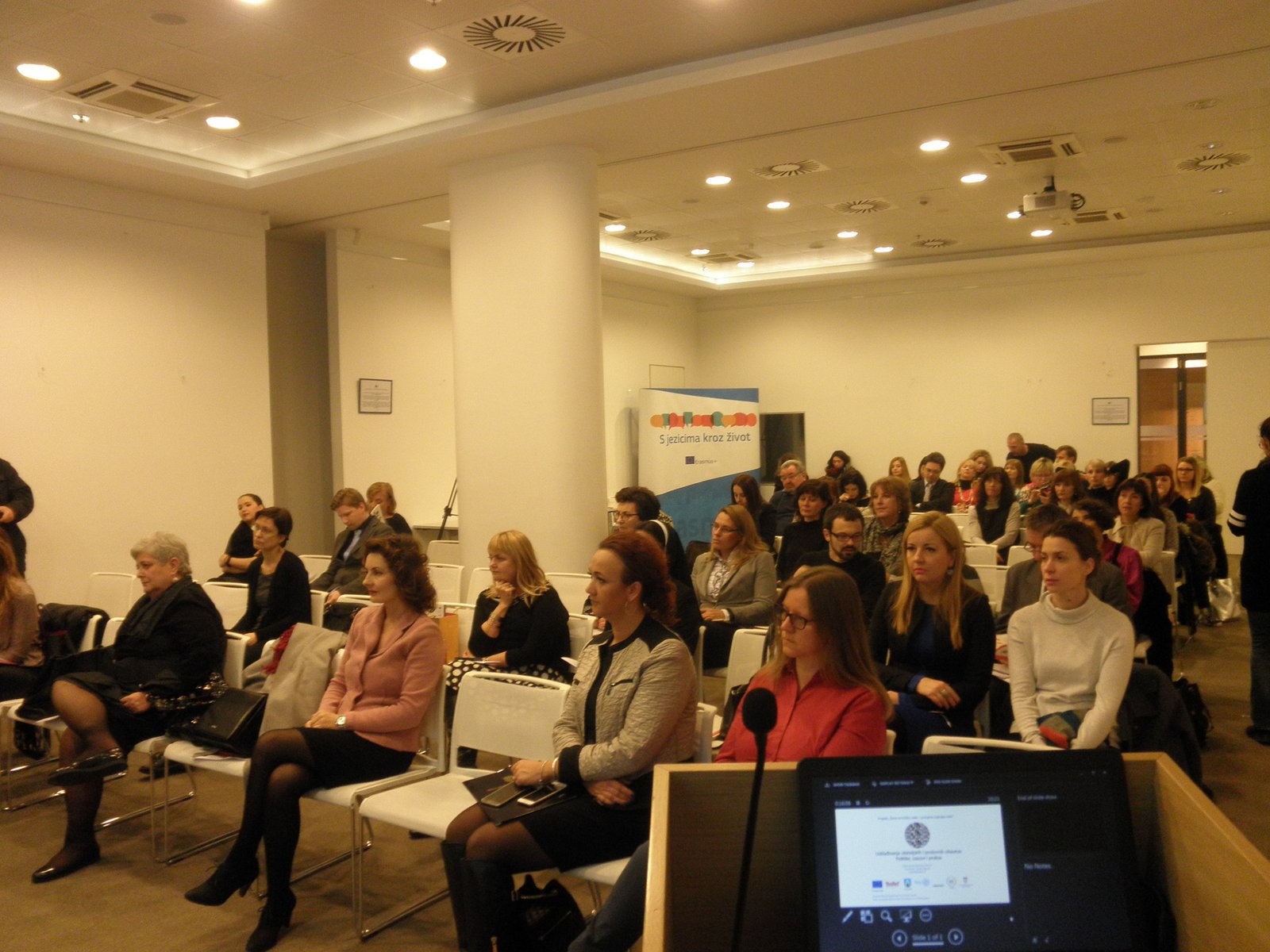
Dana 7. prosinca 2016. godine u Kući Europe u Zagrebu održana je regionalna konferencija “Usklađivanje obiteljskih i poslovnih obaveza: Politike, izazovi i praksa” kao dio projekta “Žene na tržištu rada – procjena utjecaja roda”. Projekt provodi udruga B.a.B.e. u partnerstvu s Fakultetom političkih znanosti, udrugama VIMIO i Legalina te Gradom Zagrebom, a sufinanciran je od strane Europske unije i Ured za udruge Vlade RH.
The conference brought together representatives of ministries, embassies, unions, faculties, political parties, institutions and civil society, and students, and welcoming speeches were given by Sanja Sarnavka, president of BaBa, Romana Galic, Deputy Head of the City Office for Social Protection and Persons with Disabilities, and Nada Murganic, Minister of Demography, Family, Youth and Social Policy.
Executive Project Manager Tihana Bertek briefly presented the project, research and publication and announced the premiere of a documentary film created in collaboration with Student Television. The first speaker was Mario Munta from the Faculty of Political Sciences, who spoke about precarious flexibility, i.e. predictors of negative spillover from business to private life in the Republic of Croatia. The data used in this analysis are an integral part of the research conducted in 2015 within the framework of the project.
The conference was divided into three panels. They spoke at the first panel, dedicated to the role of institutional mechanisms for gender equality Hana Grgic from the Office of the Gender Equality Ombudsman, Lejla Hodovic and Ana Vukovic from the Gender Center of the Federation of Bosnia and Herzegovina, and Sonja Robnik from the Sector for Equal Opportunities at the Ministry of Labor, Family, Social Affairs and Equal Opportunities.
Grgić je predstavila projekt “Prema stvarnoj ravnopravnosti muškaraca i žena: usklađivanje profesionalnog i obiteljskog života” i korištenje kazališta kao alata za razbijanje rodnih stereotipa, a spomenula je i MAMFORCE, certifikat za rodnu ravnopravnost u javnim institucijama, državnim tijelima i poduzećima. Hodović i Vuković govorile su o ulozi Gender centra, Gender akcionom planu BiH i financijskom mehanizmu za provedbu istog (FIGAP) i o važnosti rodnog budžetiranja. Zakonodavni okvir u Sloveniji bio je tema izlaganja Sonje Robnik, kao i stavovi građana o usklađivanju obaveza te Ministarstvo rada kao poslodavac (primjer dobre prakse). Na samom kraju Robnik je prisutnima pokazala video spot nastao u sklopu kampanje “Uravnotežimo odnose moči med spoloma.”
The presenters on the second panel were: Ivana Dobrotic from the Social Work Study Center at the Faculty of Law in Zagreb, Nada Stropnik from the Ljubljana Institute for Economic Research, and Jelena Ćeriman from the Belgrade Institute for Philosophy and Social Theory, and the moderator was Sinisa Zrinscak from the Faculty of Law in Zagreb.
Dobrotić je ujedno jedna od autorica publikacije “Žena, majka, radnica: usklađivanje obiteljskih obaveza i plaćenog rada u Hrvatskoj” nastale u okviru projekta, koju su sudionici mogli uzeti na konferenciji zajedno s dva priručnika (jedan posvećen procjeni utjecaja roda, a drugi praćenju javnih politika). U svom izlaganju Dobrotić se fokusirala na izazove vezane uz politike usklađivanja obiteljskih i poslovnih obaveza, naglasivši važnost dugoročnog planiranja i praćenja učinaka pojedinih mjera, kao i utemeljenost na stvarnim potrebama roditelja i empirijskim dokazima. Stropnik je govorila o usklađivanju obiteljskih i poslovnih obaveza u Sloveniji te korelaciji s fertilitetom i predstavila je neke mjere i dobre prakse u Sloveniji, uključujući certifikat “Družini prijazno podjetje.” Ćeriman je predstavila zakonodavni okvir u Srbiji, posebno se osvrnuvši na podjelu poslova u kućanstvu, percepciju rodnih uloga i stavove učenika i učenica osnovnih i srednjih škola u Srbiji.
The third panel brought together representatives of civil society organizations. Branka Mrzic Jagatic from Roda spoke about the specific experiences of pregnant women and mothers in the labor market on the one hand, and on the other hand, about equal parenting and the Budi tata project, which aims to increase the number of fathers who use maternity leave, but also more active participation of fathers in family life. Jelena Sapic from the Belgrade Center for Public Policy Research presented research on the happiness of families with children in Serbia, emphasizing the importance of public policies related to social protection, education, employment, healthcare and other policies that can contribute to creating a supportive environment for families with children. Diana Sehic and Arijana Catovic from the Sarajevo association Prava za sve presented the situation in BiH and warned of various problems in the field of harmonizing business and family obligations, especially those concerning jurisdiction, since the current solutions do not ensure the consistent implementation of the principle of equality before the law.
The presentations at the conference were rich in content and of high quality, the discussion was stimulating, and the audience participants actively participated by commenting and pointing out problems, and especially the lack of political will. The exchange of experiences with other countries in the region and the comparison of legislation and practice proved to be particularly useful and interesting, and a great value of the conference was the establishment of contacts among experts, which is the basis for future cooperation.